Showing posts with label math tutoring. Show all posts

Friday, November 8, 2019

Applications of integral: area between a curve and the x- axis

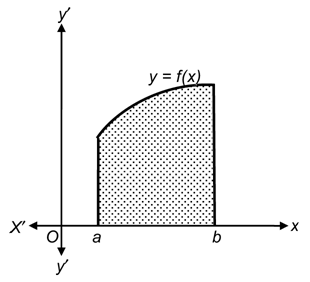
Objective: Find the area between the curve of a function f and the x-axis over an interval [a b].

Definition

The area between the curve of a function and the x-axis bounded by the verticals x = a and x = b is given by


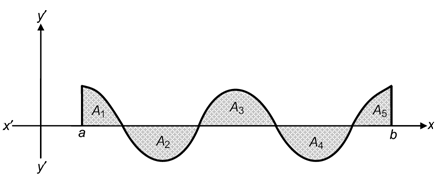
The area is positive if it is located above the x-axis and negative if it is below.


The areas A(2), A(4) are negative. The areas A(1), A(3) and A(5) are positive. The total area is the sum of all the areas: positive and negative.

Example 


Solution

Practice


         Interested in math tutoring including Calculus visit New Direction Education Services. Interested in learning Calculus online visit Center for Integral Development                                                                                                                                               

Friday, May 4, 2018

Integration by substitution

Sometimes it is difficult to integrate a function using the simple formulas of integrals. We have to introduce a second variable to make the integration easier.

Example 1

Calculate ∫(x+1)⁵dx

If it was the integral of x⁵ it would be easy to calculate. We can introduce another variable to make the integral easy to calculate. If we make x + 1 equal to u we will just have to calculate the integral of u. So let's write u = x+1

Then our integral becomes ∫u⁵dx. We calculate the integral as if it was the integral of x⁵.

 ∫u⁵dx = u⁵⁺¹/5+1 + C = 1/6 u⁶ + C

Let's substitute u we get  ∫u⁵dx = 1/6 (x+1)⁶ + C

Example 2

Calculate ∫√4x+3dx

Let's write the expression as a power:

 ∫√4x+3dx = ∫(4x+3)¹/² dx

Let's write u = 4x+3 du = 4dx then dx = du/4. Let's substitute 4x+3 and dx

∫√4x+3dx = ∫u¹/².du/4 = 1/4∫u¹/²du = 1/4(u¹/²+¹/¹/²+¹) + C = 1/4(u³/²/3/2) + C = (1/4)(2/3)u³/² + C = 1/6u³/² + C = 1/6√(4x+3)³ + C

If you are interested in learning more about integrals visit Center for Integral Development


Friday, December 1, 2017

Some considerations about the study of Calculus

Calculus has been invented a few hundred years ago by Sir Isaac Newton and Leibniz Gottfried to study the motion of planets and moons. After the work of these pioneers, several mathematicians have widened the field of Calculus by developing concepts and methods. The applications of Calculus have been extended to the study of phenomena in the physical, biological and social sciences.

Calculus is based on a few simple ideas and these have allowed the development of applications in different fields. The study of Calculus is based on a multi-representational approach to the concepts, methods, and applications represented numerically. analytically and graphically. The interesting element in the study of Calculus is that its core ideas are closed related. For example, the study of limits, derivatives, and integrals form a whole.

Calculus is the study of change and this is best modeled by the study of the behavior of functions. Functions have been studied in Pre-calculus, Different combinations of functions such as addition, multiplication, division and composition have been studied. Other properties of functions have been explored. The study of Calculus is more concerned about the behavior of functions closed to certain points. For example, the study of the different values of a function as the dependent variable comes closer and closer to a certain value leads to the notion of limits. The study of the slope of a tangent line to the graph of a function leads to the notion of derivative. The study of the area between curves leads to the study of integrals.

The study of limits helps in the understanding of the derivatives and integrals. The limit of the slope of a secant line to a curve allows to find the slope of a tangent line to this curve. The slope of the tangent line is the derivative of the function. The limit of the sum of the rectangles of the area between two curves leads to a better approximation of the area between these curves. This leads to the notion of integrals.

Interested in learning more about Calculus visit this site Mathematical Education Center 
.

Friday, June 16, 2017

Implicit differentiation

Implicit differentiation involves differentiating implicit functions. An implicit function is an implicit relation between variables. Differentiating an implicit function leads to differentiate the independent variable with respect to the dependent variable. It's basically finding the derivative using the notation dy/dx.

Two methods can be used:

1) You explicit the function

Example 1

Find the derivative of 3xy = 2
Let's explicit the function: y = 2/3x
Let's calculate the derivative: dy/dx = d/dx(2/3x)
                                                          = -2(3x)'/(3x)²
                                                          = -6./9x²
                                                          = -2/3x²
2) If expliciting is not possible, you make transformations in order to find the derivative.

The rules and formulas used to calculate the derivative of different forms of functions apply in the calculations of the derivative of an implicit function.

Since an implicit function is a relationship between the independent and the dependent variable the the application of the derivative rules might seem odd. Let's familiarize ourselves with the derivatives of some expressions where the derivative rules are applied.

Example 2.   Let's y be a function of x find the derivative of y³ with respect to x.
Let's u = y³. we have two functions: u and y. U is a function of y and y is a function of x. U is a composite function. The chain rule has to be applied in order to find the derivative. The formula to apply here is du/dx = du/dy.dy/dx
du/dx = d(y³)/dy.dy/dx
           = 3y²dy/dx.
Example 3 Find the derivative of u = 2x²y
du/dx = d(2x²y)
Let's apply the constant rule
du/dx = 2d(x²y)
 Let's apply the product rule:
du/dx = 2[d/dx(x²)y+x² dy/dx]
          = :2(2xy+x²dy/dx)
du/dx = 4xy+2x²dy/dx 
Example 4 Find the derivative of 3y³+x²y = x-3
Let's differentiate both sides:
d/dx(3y³+x²y) = d/dx(x-3)
3y²dy/dx+2xy+x²dy/dx = 1
3y²dy/dx+x²dy/dx = 1-2xy
(3y²+x²)dy/dx = 1-2xy
dy/dx = 1-2xy/3y²+x²

Practice. Find the derivatives of the implicit functions:
1) x²+y² = 15
2) 3y²-siny = x²
3) x²+2xy-y = 2
Interested in learning more about derivatives and Calculus visit Mathematical Education Center 


Saturday, June 10, 2017

Derivative of exponential functions

Derivative of f(x) = b

In the expression above b is a positive real number and is called the base of the exponential function.
The formula to calculate the derivative is d/dx[f(x)] = lnb.bx.

Rule: The derivative of an exponential function is equal to the product of the natural logarithm of the base by the function.

Example 1 calculate the derivative of f(x) = 2x

The given function has the form f(x) = bx. By applying the formula d/dx[f(x)] = lnb. bx  d/dx[f(x)] = ln2.2x

Derivative of f(x) = bu 


Since f is a composite function where u is a function of x the derivative of f is d/dx [f(x)] = d/du(bu).du/dx= lnb.bu .u'


Rule: The derivative of an exponential function with base b is equal to the product of the natural logarithm of the base by the derivative of u.


Example 2. Calculate the derivative of f(x) = 32x

Let’s apply the formula for the derivative of f(x) = bu which is d/dx[f(x)] = lnb.bu.u’
d/dx[f(x)] = ln3.32x(2x)’
                = ln3.32x.2
                = 2ln3.32x
Derivative of f(x) = ex

The derivative f(x) = eis a special case of f(x) = bx where b = e

Let's substitute b in the formula d/dx[f(x)] = lnb.bx
d/dx[f(x)] = lne.ex
Since lne = 1 d/dx[f(x)] = ex

Rule: The derivative of the function f(x) = eis the function eitself. 


Derivative of f(x) = eu 


Since f is a composite function where u is a function of x its derivative is given by the derivative of a composite function.

Then d/dx[f(x)] = d/du(eu).du/dx = eu.u’

Rule: The derivative of the composite exponential function with base e is equal to the product of the composite function by the derivative of the function u.


Example 3. Calculate the derivative of f(x) = e3x2 ( Note this is not e.3x2 but e with the exponent 3x2)
Let’s apply the formula for the derivative of f(x) = eu which is d/dx[f(x)] = eu.u’
d/dx[f(x)] = e3x2.(3x2)’ 
                = e3x2(6x)
                = 6xe3x2


Summary


The derivative of f(x) = bwhere b>0 is d/dx(bx) - lnb.bx

The derivative of the composite function f(x) = bu where u is a function of x is d/dx(bu) = lnb.bu u’
The derivative of f(x) = ex is d/dx(ex) = ex
 The derivative of f(x) = eis d/dx(eu) = eu.u

Practice
Calculate the derivative of the following functions: 3x2
1) f(x) = e6x 
2) f(x) = e3x2-4x+3 ( 3x2-4x+3 is the exponent )
3) f(x) = ex-e-x/ex-e-x

Interested in learning more about Calculus visit this site Mathematical Education Center

Friday, June 9, 2017

Derivative of logarithmic functions

In this post I'll show some techniques to remember the formulas for logarithmic  functions. I'll do some examples and leave some exercises to practice.

Derivative of logarithmic functions 

Derivative of logbx


d/dx (logbx) = 1/xlnb
To remember this formula let's apply the following technique:
1) Multiply the number of which we calculate the logarithm by the natural logarithm of the base. The number here is x and the base is b. Therefore we have xlnb
2) Take the inverse of this product. The inverse of the product is 1/xlnx

Derivative of lnx

d/dx(lnx) = 1/x
The derivative of the logarithm of any number is equal to the inverse of this number.

Derivative of logbu

Since logbu is a composite function its derivative is given by d/dx(logbu) = d/du(logbu).du/dx

d/dx(logbu) = 1/ulnnb.du/dx

Rule: The derivative of the logarithm of a composite function is equal to its derivative with respect to the new variable (u) multiplied by the derivative of the new variable (u) with respect to x.

Derivative of lnu 

Since u is a composite function we have d/dx(lnu) = d/du(lnu).du/dx
                                                                              = i/u.du/dx

Rule: The derivative of the natural logarithm of a composite function u is equal to the inverse of the function multiplied by its derivative with respect to x

Example 1, Calculate the derivative of y = x³log52x

The derivative of y is y" = (x³log52x)'

Let's apply the product rule:
Y' = (x³)'(log52x) + x³(log52x)'
The derivative of x³ is obvious. Let's calculate the derivative  of log52x
Let's write u = 2x we have (log5u)' = d/du(log5u),du/dx
                                                     = i/uln5.u'
                                                    = 1/2x.ln5.(2x)'
                                                   = 1/2x.ln5.2
                                                   = 1/xln5
let's go back to the derivative of y we have:
y' = 3x²log52x + x³.1/xlnx
   = 3x²log52x+x²/lnx

Example 2.  Calculate the derivative of y = ln(2x²-4x+3)

Let's write u = 2x²-4x+3
We have y = lnu
Then dy/dx = d/dx(lnu)
Since lnu is a composite function then dy/dx = d/du(lnu).du/dx
                                                                      = 1/u(4x-4)
Substitute u: dy/dx = (1/2x³-4x+3).(4x-4)
dy/dx = 4x-4/2x²-4x+3
           = 4(x-1)/2x³-4x+3

Practice

Calculate the derivative of the following functions;
1.log₅(2x+5)
2. 5/log(x+4)
3. ln(sinx)

Interested in learning more about Calculus AB visit this site Center for Integral Development 


Saturday, May 27, 2017

Derivative of Trigonometric functions

In this post I will state the formulas for the derivative of trigonometric functions. I will also give some techniques to remember them and solve problems. I'll do some examples and give some exercises for practice. The formulas will not be demonstrated here.

It's not sufficient to know the formulas for the derivative of trigonometric functions to be able to calculate the derivative of functions containing trigonometric expressions. The calculations of these functions involve being able to apply all the other rules that enable to calculate the derivative of a function.

Derivative of the function sine

The derivative of the function sine is equal to the function cosine. If f(x) = sinx f''(x) or d/dx(sinx) = cosx

Derivative of the function cosine

The derivative of the function cosine is equal to the opposite of the function sine. If f(x) = cosx f'(x) or d/dx(cosx) = -sinx

Derivative of the function tangent

The derivative of the function tangent is equal to the square of the secant function. If f(x) = tanx f'(x) or d/dx(tanx) = sec²x

Derivative of the function cotangent

The derivative of the function cotangent is equal to the opposite of the square of the cosecant function. If f(x) = cotx  f''(x) or d/dx(cotx) = -csc²x

Derivative of the function secant

The derivative of the function secant is equal to the product of the function secant by the function tangent. If f(x) = secx f'(x) or d/dx(secx) = secx.tanx

Derivative of the function cosecant

The derivative of the function cosecant is equal to the opposite of the product of the function cosecant by the function cotangent. If f(x) = cosecx f'(x) or d/dx(cosecx) = -cosecx.cotx.

Observations that allow to memorize the formulas

1) All the derivatives of co-functions have the negative sign. For examples, the derivative of cosx = -sinx, the derivative of cotx = -cosec²x, the derivative of cosecx = -cosecx.tanx
2) For the sine and cosine functions the derivative of the first function is equal to the second function The derivative of sinx is cosx. The derivative of the second function is equal to the opposite of the first function. The derivative of cosx is -sinx
3) When thinking about the drivative of the tangent and cotangent functions think about the the square of the function secant and cosecant. The derivative of the tangent goes with the square of the secant Example the derivative of tanx = sec²x. The derivative of cotangent goes with the square of the cosecant preceded by the negative sign, Example the derivative of cotx = -csc²x
4) For the derivative of the functions secant and cosecant think about multiplying the function secant by the function tangent and the cosecant by cotangent. Example the derivative of secx = secx.tanx. The derivative of coscx = -coscx.cotx In the case of the derivative of the cosecant don't forget to place negative placed before the product.  

Example 1

If f(x) = x²cosx+sinx find f'(x)

The derivative of a sum of two functions is equal to the sum of the derivatives of each function.
f'(x) = (x²cosx)'+(sinx)'
 Applying the product rule to calculate the derivative of x²cosx
f'(x) = (x²)'(cosx) + (x²) (cosx)'+ cosx. I apply the formula (uv)' = u'v+uv'
f'(x) =  2xcosx + (x²)(-sinx) + cosx
        =  2xcosx-x² sinx+cosx
        = -x²sinx + 2xcosx + cosx.

Example 2

If f(x) = sin²x find f'(x)
Let's write f(x) as f(x) = (sinx)²
Let's write sinx = u. Then f(x) = u² and f(u) = u²
The function f becomes the function composite f(u)
The derivative of the composite function f(u) is f'(u) = f'(u).u'
Since f(x) and f(u) are both equivalent we have f(x) = f'(u).u'
f'(x) = 2u,u'
       = 2sinx.(sinx)' (Substituting u)
       = 2sinxcosx.


Example 3

Find the derivative of f(x) = sinx-1/sinx+1

Applying the quotient rule f'(x) = (sinx-1)'(sinx+1)-(sinx-1)(sinx+1)'/(sinx+1)²
Calculating the derivatives: f'(x) = cosx(sinx+1)-(sinx-1)cosx/(sinx-1)²
f'(x) = sinxcosx+cosx-sinxcosx+cosx/(sinx-1)²
f'(x) - cosx/(sinx-1)²

Practice

1) What are the techniques to memorize the formulas of the derivative of the following functions
a) sine and cosine
b) tangent and cotangent
c) secant and cosecant

2) Calculate the derivatives of the following functions:
a) f(x) - xsinx+4
b) f(x) = xcox-x²tanx-2
c) f(x) = cos³x
d) f(x) = cosx+sinx/cosx-sinx

Interested in knowing more about derivatives visit this site Center for Integral Development

Tuesday, April 25, 2017

Introduction to the notion of derivative

In studying limit we observe what happens to the values of a function when the values of the independent variable become closer and closer to a certain value. If a function is defined for every value of its domain it is continuous there. Graphically it means that there is no hole, jump or infinite branch. Quantitatively the function has a value for every value of the independent variable that belongs to the domain of the function. In limit and continuity we have been observing some changes in the behavior of a function when the independent variable behaves in a certain way. A function might have a limit when the independent variable becomes closer and closer to a certain value. For other values of the independent variable the same function has no limit. The function is not continuous.

The notion of derivative allows us to study more systematically the notion of change in a function. It allows us to study the change at any value of a function. The slope of a function allows us to study the change in this function with respect to the change or the increase of the value of the independent variable. The slope of a line is the rate of change of the dependent variable with respect to the change of the independent variable. Since a non-linear function varies in different ways there is no precise method to define its slope. This leads to the study of the slope of a tangent line to a function.  In order to study the change of a function it is important to define the notion of rate of change or slope of a line. the slope of a secant line to a curve or average rate of change or speed and slope at a point of a curve or instantaneous rate of change.

Slope of a line

The notion of slope is familiar to the civil engineers when they build roads. They have to figure out what type of slope they have to give to a road especially when they build it on a hill or in mountains. They have to shape the road in the right slope because if the road is too steep the cars cannot climb it. The slope is calculated by taking the tangent of the angle opposed to the right angle in a right triangle where the hypotenuse is the side that is going to be inclined. The slope is the measure of the inclination.of the hypotenuse. Its measure is calculated by dividing the opposite side to the angle to the adjacent side :


The slope of a function is also called the rate of change of this function. The slope of a line is called the rate of change of this line. It is the rate of the increase of y to the increase of x. It is constant at any part of the graph. It can be positive, negative or equal to zero. The slope of a line is calculated by dividing the difference of the y-ordinates of two points of that line by the difference of the x-ordinates.


   Watch this video to get some understanding of the notion of slope:
     
Slope of a tangent line to a curve

Graph of the slope of a tangent line.png
We have a curve (C), a secant line (PQ) and a tangent line L to the curve at the point P. The problem is to find the slope of the tangent line at P. In order to do this we make the point Q become closer and closer to the point P. As the point Q becomes close to the point P the initial secant P occupies different positions. At each position the secant has a different slope, The slope of the tangent line is the limit of the slopes of the different positions of the secant (PQ). In order to come to this conclusion let's calculate the function that allows to find the slope of the secant line (PQ).


If you are interested in learning more about these concepts I recommend that you go to Center for Integral Development where you will find a course about Derivatives and different other courses.

Monday, March 20, 2017

Properties.Methods and Procedures to calculate limits and continuity

Sometimes we seem lost through the details when studying a subject. However if we get the big picture it becomes easy to continue studying.  A math topic is structured in concepts, rules or properties and theorems. This is the theoretical part. Then come the applications. The theories are applied in the applications but the procedures and methods are mastered through practice. Knowing some key theories and procedures can help tremendously in the solutions of problems. In this post I will highlight the properties of limits and continuity, the methods and procedures to solve problems.

Properties of limits

The properties of limit show how to calculate the limits of a combination of functions like the sum, the difference, the multiplication and division of functions. It shows also how to calculate the limit of the square root of a function.


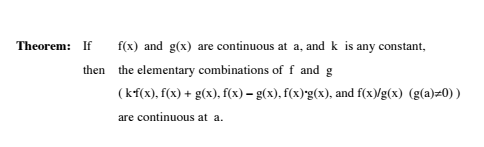
Properties of continuous functions


Methods for determining limits

There are three methods that can be used to determine a limit. These methods are: graph, table and algebra. The graph method consists in determining a limit from the graph. The table method consists in calculating the limit to the left and to the right by drawing a table for each one-sided limit. The table allows to see the behavior of the values of f(x) as x gets closer and closer to a fixed value. From there we can conclude if the limit to the right or to the left exists. If the limits from both sides exist and are equal then the limit of the function exists at the given value. The algebra method consists by substituting the value of the independent variable in the function.

Method for determining if a function is continuous

To determine if a function is continuous, we find out if it satisfies the three following conditions:
1) It is defined at a specified point "a"
2) The limit at the point "a" exists
3) The limit of the function at the point "a" is equal to f(a).

If you are interested in learning more about these concepts you can subscribe to this free Introductory Calculus course or this complete course Calculus AB

Saturday, March 11, 2017

Limits and Continuity vocabulary

These definitions can be best learned by watching some videos and observing the graphs of the functions. If you have learned the previous lessons there shouldn't be any problems mastering them

Limit

If the values of a function f approach a number L as the variable gets closer and closer to a number "a", then L is said to be the limit of the function f at the poin "a".

Two-sided limit

A two-sided limit is a limit where both the limit to the left and the limit to the right are equal

One-sided limit

A one-sided limit is a limit taken as independent variable approaches a specific value from one side (from the left or from the right).

Limit to the left

If the values of a function approach a number L as the independent variable gets closer and closer to a number "a"in the left direction. then the number L is said to be the limit of the function f to the left at the point "a"

Limit to the right

If the values of a function approach a number L as the independent variable gets closer and closer to a number in the right direction, then the number L is said to be the limit of the function f to the right at the point "a".  

Asymptote

An asymptote is a straight line to a curve such that as a point moves along an infinite branch of a curve the distance from the point to the line approaches zero as and the slope of the curve at the point approaches the slope of the line 

Vertical asymptote

A vertical asymptote is a vertical line to a curve such that as a point moves along an infinite branch of the curve the distance from the point to the line approaches zero

Horizontal asymptote

A horizontal asymptote is a horizontal line to a curve such that as a point moves along an infinite branch of the curve the distance from the point to the line approaches zero.  

End behavior

This is the behavior of the arm branches or infinite arm branches of a curve. In the case of a curve with a vertical asymptote the arm branch approaches the asymptote more and more.

Continuity of a function at a point

A function f is continuous at a point "a" if the limit of the function when x approaches "a" is equal to the value of the function at this point 

Continuity of a function on an interval

A function f is continuous on an interval if it is continuous at every point of the interval

Continuity of a function to the left at a point

A function f is continuous to the left at a point "a" if its limit to the left is equal to the value of the function at this point

Continuity to the right

A function f is continuous to the right at a point "a" if its limit to the right is equal to the value of the function at this function.

Continuous function

A continuous function is a function of which the graph can be drawn without lifting the pencil. Its graph has no hole, jump or asymptote. Algebraically a function f is continuous if for every value of its domain the limit exists.

Discontinuous function

A discontinuous function is a function of which the graph has hole, jump or asymptote. Algebraically a discontinuous function is either not defined at a point of its domain, doesn't have a limit at this point or the limit at this point is not equal to the value of the function at this point.

Removable discontinuity

Graphically a removable discontinuity is a hole in a graph or a point at which the graph is not connected there. The graph can be connected by filling in the single point.
Algebraically a removable discontinuity is one in which the limit of the function does not equal to the value of the function. This may be because the function does not exist at that point.

Non-removable discontinuity

A non-removable discontinuity is a point at which a function is not continuous or is undefined. and cannot be made continuous by giving a new value at the point. A vertical asymptote and a jump are examples of non-removable discontinuity.

Intermediate value theorem

If a function f is continuous over an interval [a b] and V any number between f(a) and f(b), then there is a number c between a and b such as f(c) = V (that is f is taking any number between f(a) and f(b)). We can deduce from this theorem that if f(a) and f(b) have opposite signs, there is a number c such as f(c) - 0. This can be used to find the roots of a function,

If you are interested in learning more about these concepts you can subscribe to this free Introductory Calculus course or this complete course Calculus AB

Friday, December 2, 2016

Notions of limits

 Before I introduce this lesson I'd like to make some considerations about math learning:

Nowadays many people turn to videos for learning. While this medium is great, written materials shouldn't put away. The written materials allow you to get an overview of what you  are going to learn and give you also the content in advance. You can choose which parts to learn first or which parts to drop depending on your interests. The most important thing also is you can review the materials as much as you can. If your reading skills are good you can learn a lot from written materials but for math there isn't a lot to read. You have to do the reading and memorize certain properties, formulas, etc. You have to practice a lot if you want to be proficient in math.

Here is the link of a detailed lesson on limits. Below is a guide  of the lesson  

Description of the lesson

This lesson starts by a definition of limits and shows you the three methods of limits using examples. Assignments consist of example assignment, practice assignment and review problems.  

 Outline

1. Objectives

The objectives of the lesson are given here. Read them to know the outcomes of the lesson. 

2. The Idea.

Here is given a conceptual definition of a limit. You can try to state this definition either in your own words without compromising the concept or verbatim for more accuracy. Now that you have a definition of limit you are going to learn  how to find the limit of a function using three methods: graphtable, algebra.

3. Methods for determining limits

a) The graph method

The graph method allows to find the limit of a function using its graph. An example is given that allows to know how to find the limit of a function using its graph. 

After reading the example and mastering the process of finding the limit the function from its graph, you should the two assignments: example assignment and practice assignment. Example assignment consists in doing the example. The practice example consists in doing an exercise that is not solved.

b) Table method

In this method you are going to use two tables to find a limit. You start by giving x some values to the left of the given value of x and you group the values of x and f(x) in a table. If you see from the table that f(x) gets closer and closer to a certain value when x gets closer and closer to the given value, that value represents the limit to the left. You do the same thing to the right of the given value of x to have a second table. If the limit to the right equals to the limit to the left, this limit represents the limit of the function.

After mastering the process of finding a limit of finding a limit using the table method, you should do the example assignment.
  
 Algebra method

This method is very simple but it involves some calculations to do. In this method you substitute x in the function to determine the limit. Here you find the limit directly. There is no limit to the left or the limit to the right to determine..

After mastering the solutions of the exercises that are examples, you do the assignment examples.

 Review problems

The review problems have problems Do the review problems involving the three methods.

Interested in learning more about limits get this free course Introduction to Calculus
You can also be enrolled in the complete Calculus course


Friday, November 4, 2016

How to learn a subject deeply

Learning a subject deeply means you know its theories and are able to apply it. Very often people learn a subject because they are required to without knowing its applications or if they would ever apply it. People learn practical subjects and are not able to apply them. These subjects require practice. But when you learn a subject deeply its practice becomes easy.

To learn a subject deeply requires to know "how to learn". You start by learning the concepts or key words in the subject. Sometimes there are words that are not known or are not well understood. Having a clear definition of these words helps to learn the subject deeply. Besides knowing key vocabulary it is necessary to master the theories. It is also important to have a clear understanding of the concepts of the subject. This can be done by having a clear mental picture of these concepts in one's mind. If it's not possible to imagine the concepts one can try to represent them by a visual representation. In order to learn a subject deeply it has to be absorbed gradually. so that the previous concepts can be applied to the following ones.

Deeper learning is the ability to apply knowledge to new situations. Deeper learning is associated  with better life and work outcomes according to a 2012 report.

Superficial  learning is associated with poor performance. On the 2012 Program for International Student Assessment (PISA), a test that measures students' abilities to apply their knowledge to real-world problems U.S fifteen years old scored 26th of the 34 industrialized nations in mathematics.

Schools that practice deeper learning have their students graduated and attended college at higher rates than schools that don't use deeper learning.

Students who practice "deeper learning" take responsibility for their learning. In "deeper learning" students master their subjects deeply. They know the concepts, can apply them and reflect deeply on the subject.

Deeper learning is defined by 6 competencies: mastering content, critical thinking, effective written and oral communication, collaboration, learning how to learn and developing academic mindsets.

Deeper learning is associated with practice and reflection. In practical subjects learners can build things. Imagination, intuition and inspiration are some of the characteristics of deeper learning.

Deeper learners cultivate academic mindsets. They make the most out of their learning experiences. They hold the following key beliefs:
"I can change my intelligence and abilities through effort"
"I can succeed"
"This work has value and purpose for me"

Beliefs and learning skills bring success for learners.

If you are interested in getting some help in learning Math, French, ESOL (English to Speakers of Other Languages), Spanish, visit New Direction Education Services at www.ndes.biz to get the contact information . If you need help in AP Calculus take this Introductory Course for free. You can access the complete course here (click the word "here")

Friday, October 30, 2015

Interest And Recognition Can Help A Student Become A ‘Math Person’

In a new study published in the journal Child Development, Florida International University Professor Zahra Hazari found that interest and recognition can help a student become a "math person" and pursue a STEM career.

Math isn't exactly every student's favorite subject, but those who have an affinity for it aren't necessarily born a "math person," as one might think.
"Much of becoming a 'math person' and pursuing a related STEM (science, technology, engineering or math) career has to do with being recognized and becoming interested - not just being able to do it," said Hazari, who specializes in STEM Education at FIU's College of Education and STEM Transformation Institute, according to the NEA blog. "This is important for promoting math education for everyone since it is not just about confidence and performance."
Hazari, who worked with colleagues Jennifer D. Cribbs from Western Kentucky University, and Philip M. Sadler and Gerhard Sonnert, both from Harvard University suggests that interest and recognition are key factors that can help students develop math skills.
The study, "Establishing an Explanatory Model for Mathematics Identity," suggests that students who feel confident in the subject won't necessarily become engaged in it, as previous studies have suggested.
The team surveyed more than 9,000 college calculus students from across the country. They found that students in the high-level course wanted to pursue math mainly because they'd received recognition for their abilities and also found it interesting.
In the survey, students were asked if they thought parents, friends, relatives, and math teachers saw them as a "math person."
Those who responded "yes" were classified as feeling recognized.
In other words, what motivates a student to pursue a career in STEM and encourages them to continue along this path is interest, recognition, and engagement.
"It is surprising that a student who becomes confident in his math abilities will not necessarily develop a math identity," Hazari said. "We really have to engage students in more meaningful ways through their own interests and help them overcome challenges and recognize them for doing so. If we want to empower students and provide access to STEM careers, it can't just be about confidence and performance. Attitudes and personal motivation matters immensely."
Source: http://www.ischoolguide.com/articles/15754/20150624/study-help-student-math-stem-career.htm
 Interested in learning to use effective study skills? For free tutoring by email fill out this form:
 Free Tutoring by Email . For paid tutoring and courses visit New Directions Education Services at www.ndes.wikidot.com


Friday, May 15, 2015

Top 10 Strategies to Improve Your Math Learning or Grades

1 If you don't understand something, focus on mastering that topic before moving on to the next topic

Math topics are set in sequence. It is essential to master one topic before moving to the next one. Stick with the topic you don't understand until you understand it fully. Read the theories and examples a second time or use another book or other resources that can allow you to understand the topic better. Moving to the next topic without mastering the present one can lead to frustration and abandon.

2. Work example problems and check your answers to gain practice with every lesson

Start by reading the examples of problems done in class, a book or whatever materials you are using and masteri the procedures used to solve these problems. Then start solving the problems that have answers to them beginning with the easiest ones and moving to the hardest. Make sure to check the answers to the problems you are working on. Work a dozen or two problems before moving to the next section.

3. When beginning to work a Math problem, do not "map out a path from problem-to-answer" in your head before writing anything down

This srategy may lead to skipping the steps necessary to solve a problem and focusing on the answer. What is best to do is to start by writing down the problem. Then write each step leading to the solution of this problem.. Write down what you are going to do and do it in the next step. For example, if you are going to divide both sides of an equation by a number write that down and do it as another step which is the execution of what you just write down.

4. When you study and do homework, try to find a quiet place to do it

Try to find a quiet place at home or in the library to do school work. This will allow you to do your work more quickly because you are able to to focus and learn more.

5. If someone asks you for help, try to explain the topic to them as best as you can.

In studying in a group try to help someone who is behind. This has two benefits. First you help someone to succeed. Second, the fact that you are helping someone else helps you understand the subject matter better.

6. Never, ever work math problems in pen

When you use a pen you can erase some mistakes but your work will not be neat

7. Try to use a mechanical pencil with separate eraser, if you can

Mechanical pencils have cleaner lines. The separate eraser allows you to erase more cleanly. 

8. Keep your solutions neat and line-by-line

Write vertically instead of horizontally. This allows you to present a more understandable work.

9. Don't work problems very late at night.

After doing different activities during the day it is not easy to concentrate at night because of tiredness. This may leads to make mistakes when working on problems. It's better to get a good night sleep and to wake up refreshed during the mornings. You'll find yourself in better shape to work on problems.

10. If the problem lends itself to it, draw a picture of the problem

Some math subjects such as Geometry and Trigonometry involve drawing shapes in order to solve problems. Other subjects such as Algebra are more abstract. However any mathematical concept or problem can lead to a visual representation. The visual representation allows to understand the problem more clearly.
 
For free tutoring by email in math and other subjects fill out this form: Sign up form for free tutoring by email 

For more about tutoring and online courses, visit New Directions Services at www.nd-educationservices.com.


Thursday, April 9, 2015

Some techniques to learn something new

It is essential to know the basic techniques of how to study in order to study better but there is also a lot of techniques that facilitate learning. These techniques are particularly helpful when someone learns something he is passionate about it either a subject, a field of knowledge for a profession or  a hobby. Talent is the starting point to love learning at some thing. It can be natural or can come as a result of some circumstances. Natural talent means the ability to learn or do something comes without a lot of effort or external motivation. But sometimes one can develop some abilities for doing something from external influences. Natural or acquired talent, motivation, attitude and the application of some techniques are the elements that make  people to become proficient learners. Below are the techniques:

1. Love it. Love is the fuel of motivation. If you love something you'll learn it better.
2. Read it. Reading about something helps you learn a lot about this thing. Learning the history of something can help you to know the evolution of the subject and master the key developments. Study the techniques of people who are famous at something can help to become good at it. Fischer, a famous american chess player, studied the history of chess and the techniques of famous Russian players and became the world champion.
3. Practice it. Do something many times makes you good at it. It becomes a routine. Writing a lot makes you a writer. Practice also helps you to see your mistakes and improves.
4. Get help from teachers, tutors and experts. Getting help from others who master the subject can help you to learn better. You can learn beyond the guidance of a particular teacher by forming a personal learning network made of people you can contact for questions or help in learning.
5. Study the history. Study the present. To become a master at something incorporate the study of the history and the present in the learning of that thing. An expert programmer would study all previous programs all the way to the modern ones. An entrepreneur would study the history of famous entrepreneurs.
6. Do easy projects first. Start by doing some basic projects and learn from it. Programmers start by doing the "Hello, World" program before becoming expert on more sophisticated programs.
7. Study what you did. If you fail at something you udertake look at it and see what was wrong. Find out what happened and what would have helped better. Ask good questions like: What did I do wrong and how can I improve?   
8. Be part of a group. Find the best group and spend the time to learn with them.
9. Find the right plan. Find a plan that is appropriate for you and come up with something new
Source: The Only Technique To Learn Something new.
If you are interested in finding a tutor to help you to learn Math, French, ESL and Spanish and who will give the techniques to learn better visit NEW DIRECTION SERVICES at www.ndes.wikidot.com and click the contact button. Those interested in free tutoring by email should go to the site Paid Tutoring and Free Tutoring and click the link that will allow to fill a form                                                                                                                                                                                                                               

Friday, March 27, 2015

Ten smart study tactics that support how the brain actually works

In the human being the brain performs actions on the body and makes mental representations of the environment. Learning occurs when the brain responds to certain stimuli from the environment or when a new mental representation is made. In animals learning occurs by habituation or associatively. If an animal is introduced in a cage where lives another animal the latter can have a certain reaction to its guest but over time can react differently. The new response from the animal that previously lives alone is considered as a modification of the behavior of the animal. This modification is considered as learning and this learning is non-associative and occurs over time. A dog salivates when they present it some kind of meat. The sound of a bell is associated to the presentation of the food and the association is repeated several times. Later the food isn't presented and the bell rings. The dog salivates when it hears the bell. The animal produces a response to a new stimulus in the environment which is the bell. This new response is a modification of its normal behavior and is considered as learning. This learning occurs from the association food-bell. For this reason it is called associative learning. This learning occurs as a result of the conditioning of the dog and this this type of conditioning is called classical conditioning. In operant conditioning learning occurs by rewarding or punishing a type of behavior. Now let's define learning.

Learning can be defined as:
1. The acquisition of knowledge or skills through experience, study or being taught
2. The cognitive process of acquiring skill or knowledge
3. The modification of behavior through practice, training or experience.

If learning is a process of acquiring knowledge there are some strategies that should be involved to acquire that knowledge, skills or behaviors. Here are the ten strategies based on experience and scientific study:

1. Test yourself before you study. According to Elizabeth Bjork, a psychologist, taking a test adjusts your thinking to what you need to know. This strategy may help to focus.
2. Space out your study session over time. Experiments done in mice showed that they remember better over multiple repeated sessions of training than in a single prolonged session according to  Christine Gall and Gary Lynch from the University of California.
3. Change up your study environment. Changing your environment forces the brain to retrieve the information in different places and will therefore view that information more useful. The brain wants variations. It wants to move and periodic breaks Finding some new scenery will create new association in the brain and will make it easier to retrieve the information later.
4. Take regular naps. In 2013 sleep researchers at UMASS (University of Massachusetts), Amherst found that daytime naps support learning in preschool children by strengthening their memory.
5. Quiz yourself instead of re-reading. When you reinforce your memories by testing them, they get stronger than if you review the materials.
6. Check-in with yourself periodically. Make a list of everything you remember and go back and see what concepts you've missed. This strategy can be done for a chapter or an entire course.
7. Separate process from progress. Learning is a process that never ends. At different times you make progress on it.
8. Look forward to forgetting. Forgetting is part of the learning process. It strengthens the memory.
9. Imagine you'll be teaching someone else. When students expect to teach new materials to others, they remember more of  the material and organize their recall more effectively, says John Nestojki, a postdoctoral researcher in psychology at Washington University in Saint Louis.
10. Study to learn not to know. Study to remember something for a lifetime is better than study for a test.
Source: http://www.opencolleges.edu.au/informed/features/how-does-the-brain-learn-best-10-smart-studying-strategies/?utm_source=UnCollege+List&utm_campaign=e450f4e4c3-Newsletter_3_21_15&utm_medium=email&utm_term=0_61258d4530-e450f4e4c3-292498285           For Free Tutoring by Email visit this page Paid Tutoring and Free Tutoring by Email
For Paid Tutoring visit New Direction Education Services